Fat Cells Converted Into Stem Cells Can Repair Any Damaged Tissues.
Tin can a simple injection of stem cells repair damaged backs?
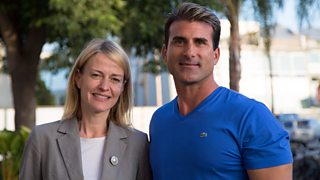
Surgeon Gabriel Weston travelled to Los Angeles in California to expect at a clinical trial that is evaluating an injection of stem cells for treating chronic depression back hurting.
Every bit nosotros age, nosotros tin all expect some degree of vesture and tear to bear on the discs that sit between the bones of our spine, simply for those who suffer serious disc degeneration the result can exist intense and debilitating chronic low dorsum pain. For many patients the only option currently available is invasive back surgery, usually spinal fusion or artificial disc replacement, is unacceptable. Surgery like this tin lead to more issues in the future and at that place is no guarantee that it volition cure the pain or improve function.
At present a new stem jail cell treatment is being evaluated in a Phase 3 trial in the United states which, if successful, could provide patients with an culling to surgery.
Orthopedic surgeon Dr. Hyun Bae participated in the beginning trial and is also one of the investigators in the current trial evaluating the stalk cell therapy. The electric current trial will enroll 660 patients with damaged discs and chronic low back pain. Patients will receive an injection of either of two stalk prison cell formulations or a placebo to exam whether the stem prison cell treatment may lead to meaningful clinical improvement. The trial is double-blinded which means that neither the patient nor the doc will know which injection is being administered.
For this trial, specific stalk cells called mesenchymal precursor cells (MPCs) are obtained from healthy donors, isolated and expanded, and are available every bit off -the-shelf readily available therapy. It's thought that when they are injected into the degenerated disc, they help to stimulate the discs to repair themselves.
The Phase 2 trial, which assessed the MPC treatment in 100 patients, showed that 70% of those receiving a dose of stem cells experienced a l% reduction in their back pain after one twelvemonth compared to approximately 30% of patients receiving placebo. For Dr Bae, who has been working in regenerative medicine research for 12 years, this represents important progress in the management of this disease and was the first time he had seen the treatment arm shell the placebo arm.
The Phase three trial is ongoing and, although results won't be known for some time, if information technology proves successful, information technology could pb to this new treatment becoming canonical and available to patients worldwide.
Useful links
Source: https://www.bbc.co.uk/programmes/articles/56lsqDFThn94zD3WC5Wfxwl/can-a-simple-injection-of-stem-cells-repair-damaged-backs
0 Response to "Fat Cells Converted Into Stem Cells Can Repair Any Damaged Tissues."
Postar um comentário